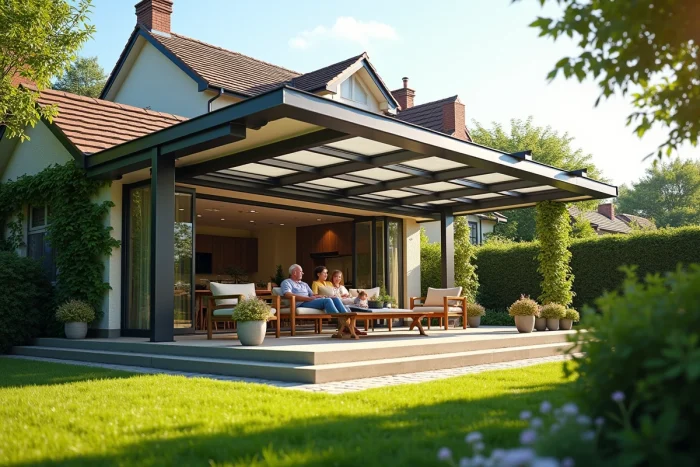
Polycarbonate accumulates heat through the greenhouse effect as soon as solar radiation exceeds a certain threshold. Here we classify ten concrete solutions for polycarbonate pergolas, from the most effective to the simplest to implement, by crossing real thermal gain, installation cost, and durability.
1. Opaque honeycomb panels with anti-IR coating
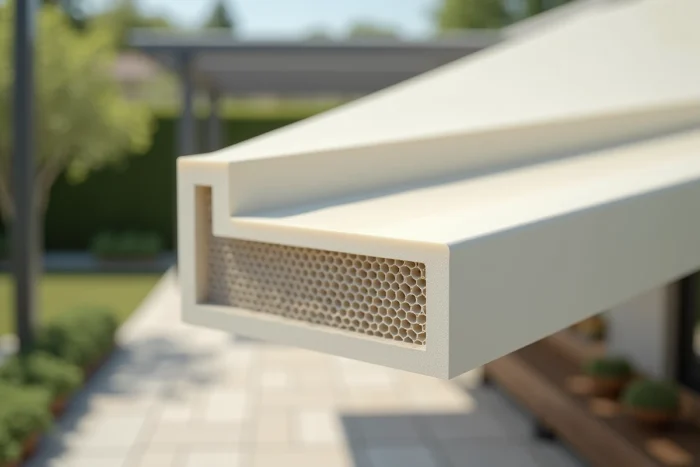
This is the most effective lever. Replacing transparent sheets with opaque honeycomb panels treated with anti-infrared reduces thermal transmission by more than 50% compared to standard polycarbonate, according to the technical report from Palram Industries in March 2026. The diffuse brightness remains sufficient to maintain a pleasant space without artificial lighting during the day.
Since the NF DTU 36.5 update in November 2025, a maximum thermal transmission coefficient (U less than 3.5 W/m²K) applies to polycarbonate roofs on open structures. Anti-IR panels meet this requirement without the need for an additional insulating layer. We recommend checking the manufacturer’s certification before placing any order.
To explore anti-heat solutions for polycarbonate pergolas, several hybrid configurations deserve to be compared based on the orientation of the structure.
2. External projection awning on the roof
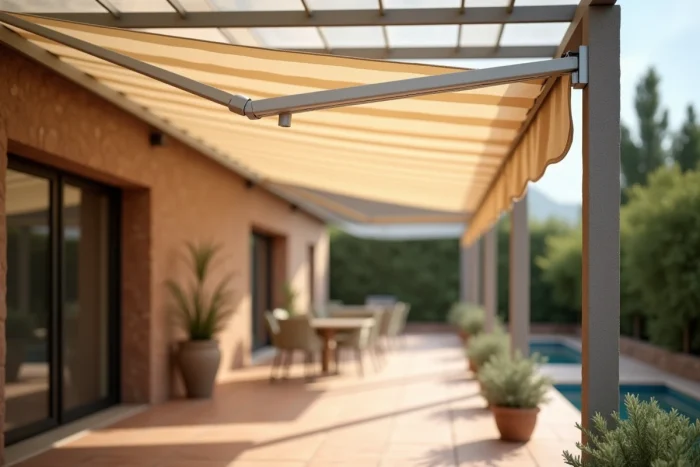
Installing solar protection outside the glazing changes everything. A projection awning installed above the polycarbonate sheets intercepts radiation before it passes through the roof. The thermal gain is significantly higher than that of an interior awning, because solar energy is blocked before entering the structure.
The micro-perforated fabric remains the best compromise: it allows air to circulate between the fabric and the polycarbonate, preventing overheating by confinement. A motorized awning with a solar sensor automates deployment and limits forgetfulness.
3. Reflective solar film to apply on the panels
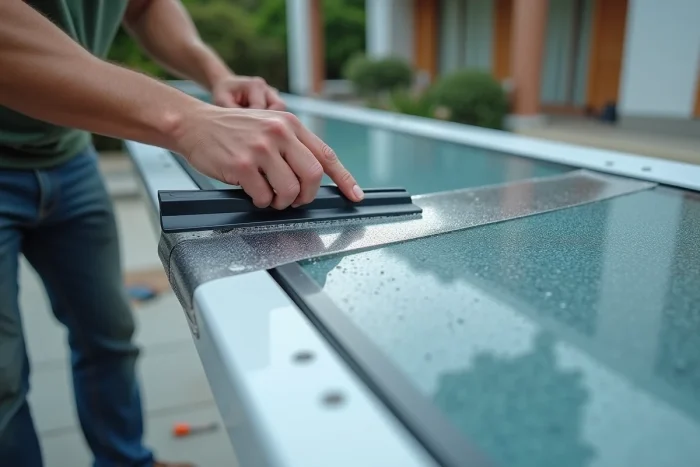
The reflective solar film adheres directly to the outer face of the polycarbonate. It reflects a significant portion of infrared radiation while maintaining partial transparency. This low-cost solution is suitable for existing pergolas where complete panel replacement would be disproportionate.
The lifespan depends on the quality of the film and UV exposure. Expect to replace it every few years in Mediterranean areas. Application requires a clean, dry surface, free of bubbles, which demands a minimum of method.
4. Cross ventilation through side openings and ridge
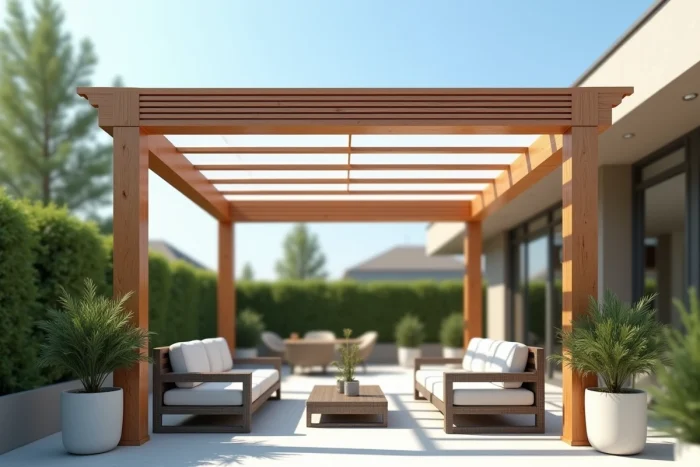
Without air renewal, no solar protection is sufficient. Heat stagnates under the polycarbonate if warm air cannot escape. A ridge opening at the top, combined with low side vents, creates a natural draft that expels overheated air.
The size of the openings must be dimensioned based on the covered area. We observe in the field that many pergolas underestimate this aspect, which cancels out part of the benefits of other solutions.
5. Automated high-pressure misting
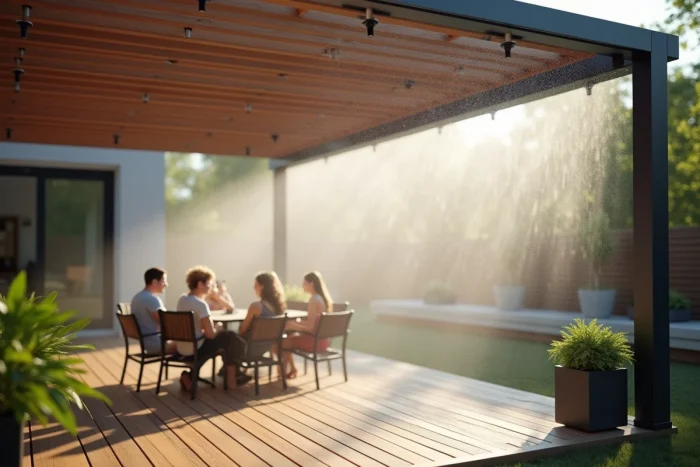
Fine high-pressure misting lowers the perceived temperature under the pergola by up to 10 °C, according to feedback from the French Federation of Joinery Companies. The system works particularly well when coupled with honeycomb polycarbonate, which limits the entry of radiative heat.
The weak point remains maintenance: the nozzles clog with limescale, especially in hard water. A water softener upstream or stainless steel nozzles extend lifespan. Automation via a temperature sensor prevents water waste.
6. Honeycomb polycarbonate in bronze or smoked tint
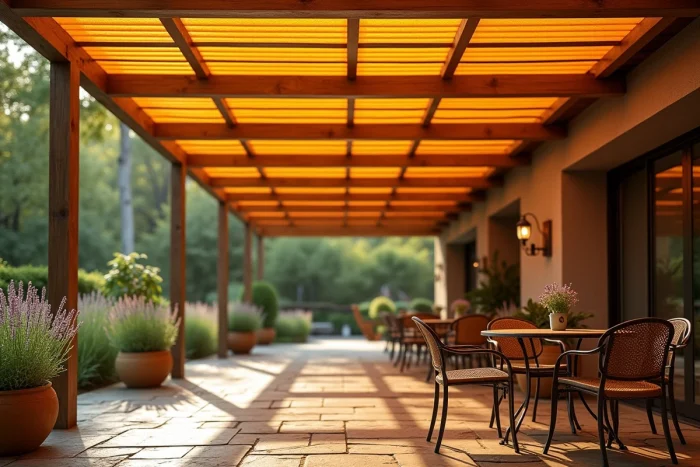
Choosing a bronze or smoked tint when purchasing the sheets reduces light transmission and thus heat gain. It is a passive, maintenance-free solution that acts continuously.
The compromise lies in brightness: under smoked polycarbonate, the ambiance is more subdued. For a dining or relaxation space, this is often an advantage. For a garden lounge where natural light matters, it is better to combine a clear panel with an external awning.
7. Reed or vegetated pergola on the roof
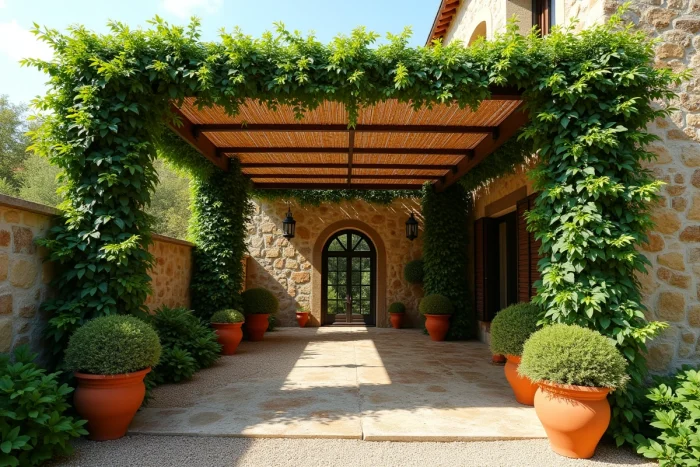
A bamboo or wicker reed fixed above the polycarbonate creates additional shade and interrupts direct radiation before reaching the roof. Air circulates between the reed and the panels, preventing the confinement effect.
Vegetation (wisteria, virgin vine) offers the same principle with a superior aesthetic result but requires several seasons of growth and regular maintenance. The reed, on the other hand, can be replaced in half a day.
8. Thermal insulation with double honeycomb wall
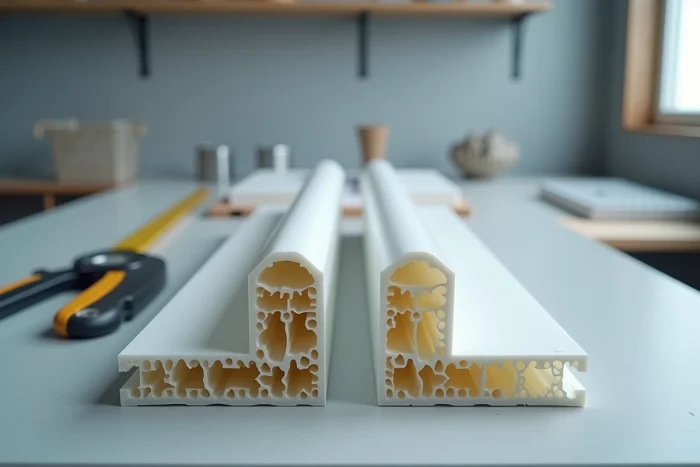
Switching from a single sheet to a double honeycomb wall (16 mm or more) significantly improves insulation due to the additional air chambers. The U coefficient decreases, limiting thermal transfers in both directions.
This option is particularly justified during new construction or complete roof replacement. Adapting an existing structure requires checking the load-bearing capacity, as thicker panels are also heavier.
9. Outdoor ceiling fan circulating air under the pergola
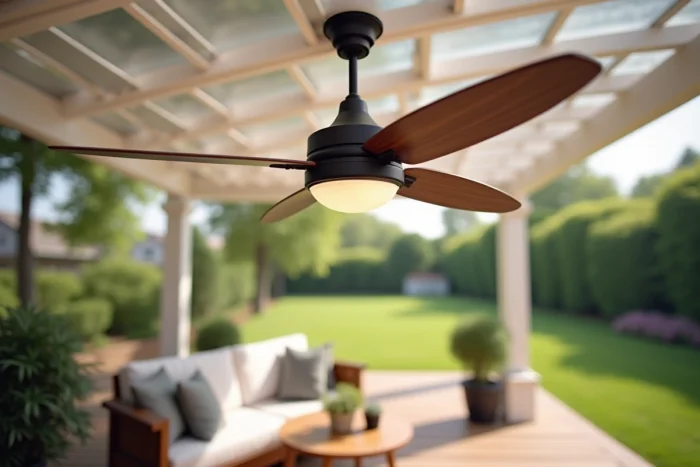
An outdoor ceiling fan (minimum IP44 protection rating) circulates air under the pergola and accelerates skin evaporation. It does not cool the ambient air, but the feeling of freshness is immediate.
We recommend a model with wide blades turning at low speed to cover a large area without noise nuisance. The cost of electrical operation remains negligible compared to air conditioning.
10. Portable reversible air conditioning as a supplement
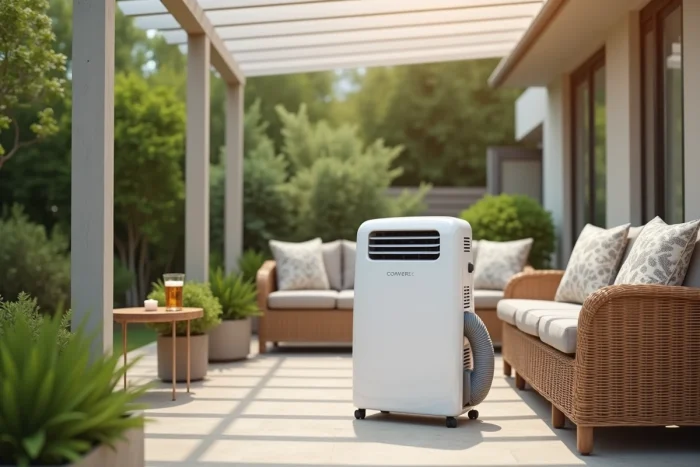
Portable air conditioning remains the last resort when passive methods are insufficient, typically during prolonged heatwaves in southern France. A reversible monobloc with an exhaust duct provides quick cooling of a semi-open space.
Efficiency drops significantly if the pergola is open on multiple sides. For the device to be useful, at least side awnings or curtains that partially confine the volume are necessary. Air conditioning does not compensate for a thermal design flaw, it only temporarily masks it.
Each polycarbonate pergola combines its own constraints of orientation, surface area, and budget. The top three solutions (anti-IR panels, external awning, reflective film) cover the majority of thermal gain. Ventilation and misting serve as complements. Air conditioning is only justified if all other options have been explored, and only in a semi-closed configuration.