
0.0000000001 seconds. That’s about the time it takes for light to cross the distance of a hair. It’s also the speed at which our certainties collapse when modern physics challenges the old idea of space limited to length, width, and height. The theory of general relativity, by adding a fourth dimension, has imposed a new perspective on motion, gravity, and the very way we think about reality.
Today’s scientific approaches rely on these four dimensions to explain both microscopic reality and galactic structures, and it goes much further than one might imagine. Understanding these building blocks of space-time is not only one of the greatest challenges of fundamental sciences but also opens the door to concrete advancements that are already impacting society and our daily lives.
Dimensions: much more than a matter of intuition
For a long time, the three dimensions—length, width, height—were sufficient to build our cities, create maps, and imagine the world. Yet, behind this solid façade, mathematicians quickly detected its limits. As soon as equations tackle the deep nature of things, a fourth coordinate must be summoned. And this revolution is not limited to a school exercise or a few circles of insiders.
Since Einstein, it’s impossible to talk about position without integrating time. This new reference has changed the rules of the game. Scientists now adjust their models to include this elusive variable. For those who wish to take a fresh look at this upheaval, the 4 dimensions of space explained sheds light on this fundamental shift without unnecessary jargon.
However, the dimension is not confined to hard sciences. Even during the Renaissance, painters invented perspective to suggest depth and deceive the eye. Today, social sciences are looking towards dimensions to interpret behaviors and collective dynamics. At every era, this concept stretches, transcended by human ingenuity.
Space-time: when time redistributes all the rules
With relativity, time and space become one. Gone are the days when yesterday was fixed and tomorrow seemed out of reach. Everything moves, everything interacts, down to the slightest planetary movement or the signal passing through our smartphone.
On the gravity side, no more mysterious force. Each mass deforms its environment, creating unexpected trajectories for everything that passes nearby. This phenomenon, far from being anecdotal, is nestled in our daily lives. Take a concrete example: without corrections accounting for relativity, no GPS can position you correctly, whether to assist a motorist or guide a hiker on an unknown trail.
Here are some areas where the fourth dimension is already shaking up practices and offering tangible benefits:
- In 4D medical imaging, specialists observe an organ in motion, detect an anomaly, anticipate the evolution of a tumor—everything becomes more precise.
- Planning the trajectory of a spacecraft to Jupiter absolutely requires calculations based on the curvature of space-time; otherwise, the mission is compromised from the start.
- Astrophysics simulates the birth and dance of galaxies over billions of years, articulating spatial and temporal coordinates to understand the vast theater of the Universe.
The addition of time in our reasoning changes the game. Whether it’s tracking the life of a forest, imagining new alloys, or studying the evolution of a civilization, ignoring the fourth dimension would be like watching a movie while freezing each frame. Research, education, and technology can no longer do without it.
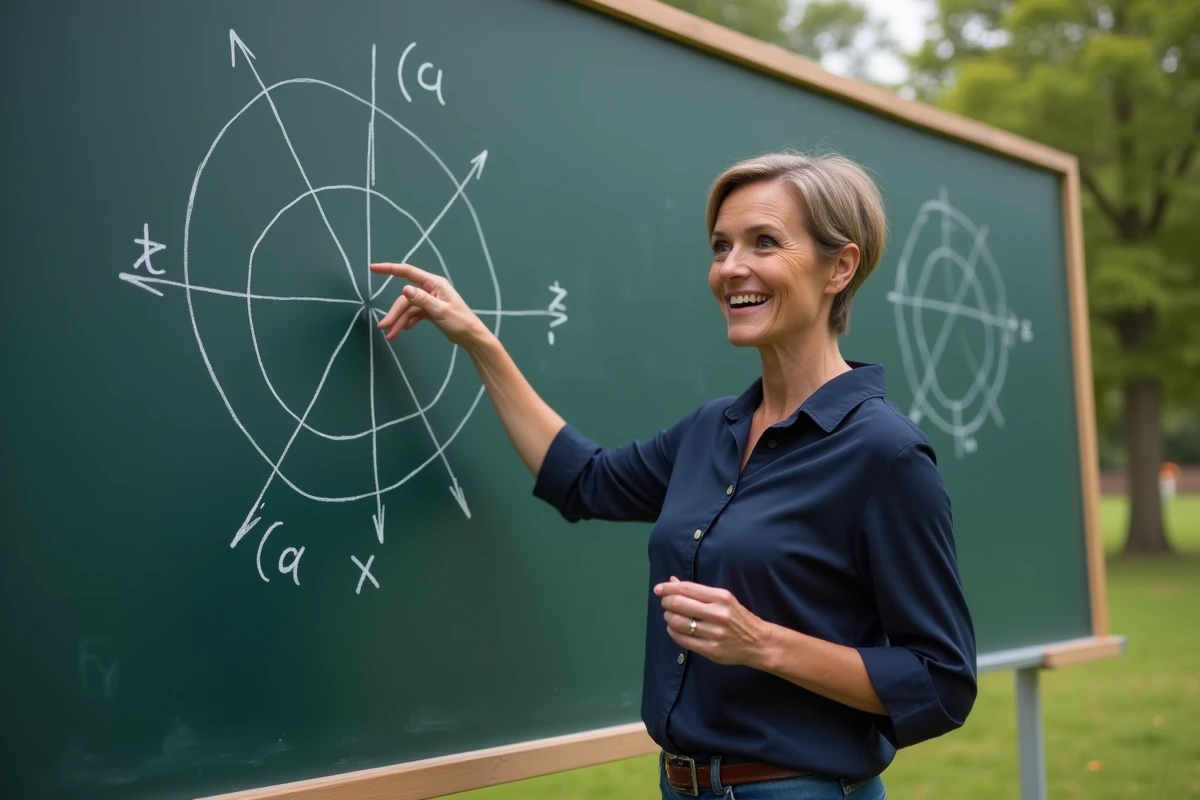
Other horizons: what if everything could still move?
Outside the traditional academic field, some theories, notably string theory, envision a universe made up of much more than four dimensions. These invisible axes, hidden in the minuscule, escape immediate perception but open fascinating perspectives in mathematics and fundamental physics.
Quantum mechanics, too, shakes up our references: uncertainties, superpositions, and permanent fluctuations challenge the very notion of space and time. The universe at the scale of particles does not conform to any long-standing masonry evidence.
This revolution also infiltrates fiction. Interstellar features slowed time that resonates with emotion as much as knowledge. Long before, H.G. Wells had already imagined the time machine. These works reflect human fascination with ever-renewed horizons and inspire researchers and dreamers.
Finally, technology democratizes this field once reserved for a few experts. Thanks to Unity, Unreal Engine, or immersive devices, experiencing the fourth dimension is now possible in classrooms, labs, or living rooms. Educational methods and artistic creations are constantly reinventing themselves.
Accepting that each coordinate can evolve means making movement the rule rather than the exception. The world gains depth with each added variable, the unknown invites itself where one thought they held the key to reality. The scientific adventure has never ceased: new worlds await, behind every angle, every question, every dimension just sketched at the tip of a pencil.