
The numbers are stubborn: every year, the number of lost items rises in European households. Reminders, routines, nothing works; distraction holds strong. To address this, some manufacturers are taking the lead: color codes, sound signals, every detail counts to outsmart the forgetfulness that lurks at every moment.
Now, keychains and wallets host discreet devices packed with location chips. Even the kitchen is getting in on it: some utensils change color as soon as the heat rises too high. Behind this avalanche of solutions, one guiding idea stands out: adapt the object to the human, not the other way around. Manufacturers are no longer trying to train users but to work with their unpredictability.
When design shapes our daily lives: understanding the principles that make objects accessible to all
The design of everyday objects now goes beyond mere aesthetics or trends. It has become a true lever in organizing our actions, adopting our routines, and the fluidity of our most ordinary tasks. At every stage of design, specific criteria guide the hands of designers: accessibility, ergonomics, efficiency. The focus is on prioritizing simplicity, ensuring readability, and imagining objects that can be tamed without a manual.
To illustrate these choices, here are some concrete examples of decisive elements that make an object truly accessible:
- A handle designed to fit all hand shapes, without effort or contortion.
- A clear interface, where each function stands out at a glance.
- Buttons that are immediately identifiable, without the need to fumble.
A successful object is one that fades into the background of use, becoming a natural extension of the gesture.
The generalization of design pages and deliberately streamlined digital interfaces contributes to this democratization of use. Simplified navigation, shortened paths, instant visibility of main functions: everything converges towards reducing mental effort and the temptation to get distracted. Even in public documents, in menu systems or data import tools, this logic permeates. The goal: lighten the cognitive load, limit lapses in concentration.
It is in this spirit that devices like Rabbit Finder are pioneers. The technology is discreet, entirely dedicated to one mission: to find your belongings without wasting a minute or burdening you with unnecessary information. Their massive adoption is no trivial matter: each new user, each vote or evaluation feeds a virtuous circle of improvement, sometimes measured in millions of documents or views.
This underlying movement is not limited to physical objects. It extends to email management, consulting professional documents, every window, every page, every button of our digital interfaces. The demand for accessibility and efficiency is everywhere, becoming the very condition for a calm daily use.
Smart objects and unexpected innovations: how technology helps the distracted throughout the day
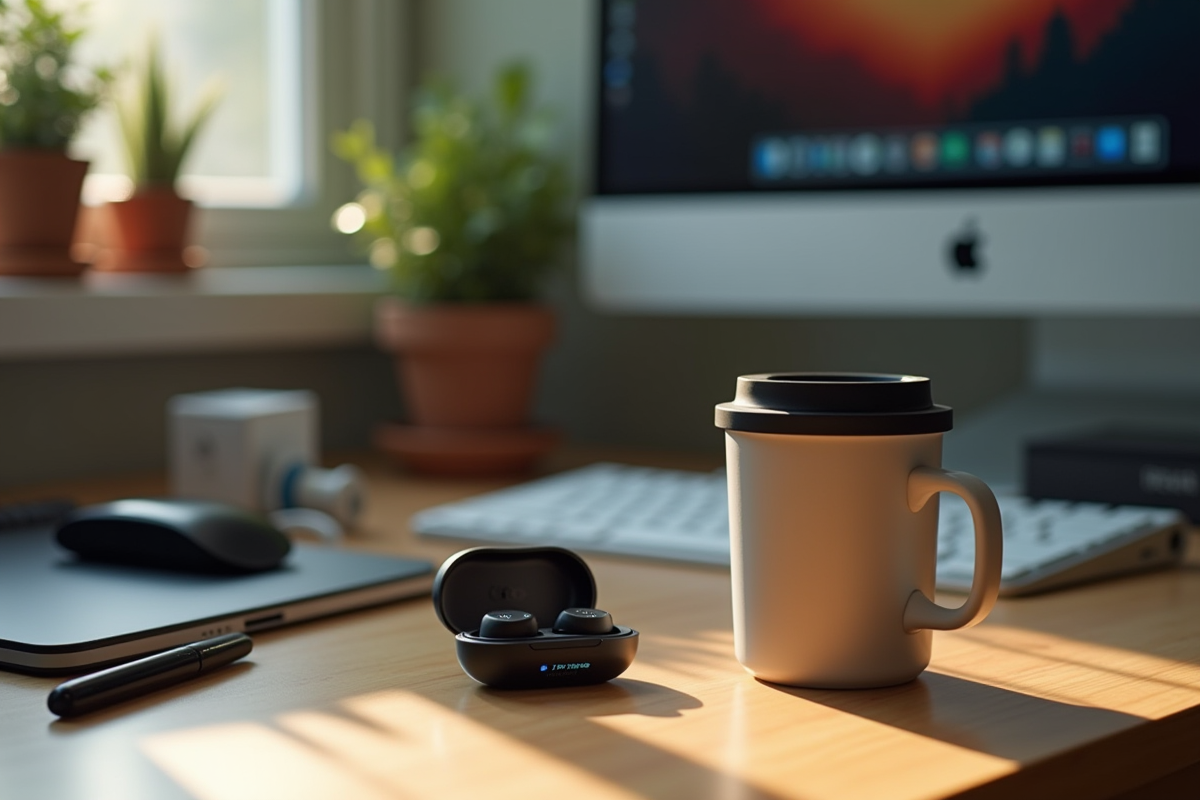
Technology is now invited into every corner of the routine, without seeking to shine. It manifests in everyday objects designed to be helpful, not to impress. From the morning, the phone orchestrates appointments, the alarm clock analyzes sleep quality. A small connected object placed on the table discreetly directs attention to priorities, displaying notifications in a new window without invading mental space.
The most effective innovations assert themselves quietly. A light turns off by itself, a lock opens remotely, simplicity invites itself everywhere. The success of these devices is measured in millions of views, each vote from a user confirming their utility. With each use, each document evaluation, technology continues to learn and refine its responses.
Here are concrete examples of how these devices make life smoother on a daily basis:
- The navigation menu of a web page allows data import in seconds, without unnecessary complexity.
- An email received in a mail client window instantly opens the desired document, without detours or information overload.
- Managing advertisements now takes place in the background, reducing visual clutter while offering the possibility to subscribe to truly relevant offers.
Ultimately, these objects almost disappear, absorbed by their use. The ambition is clear: to provide a tangible time-saving, refocus attention, and turn every potential distraction into a support point for vigilance. Design pages and streamlined interfaces embody this turning point: each page view, each document evaluation vote contributes to shaping a clearer, less cluttered daily life.
The scene is changing. Objects, once silent and inert, are becoming allies that anticipate our lapses in attention. Perhaps one day, losing your keys will be nothing more than a distant memory, relegated to the status of anecdote. It is up to everyone to imagine what new trick will come tomorrow to support the most dreamy minds.