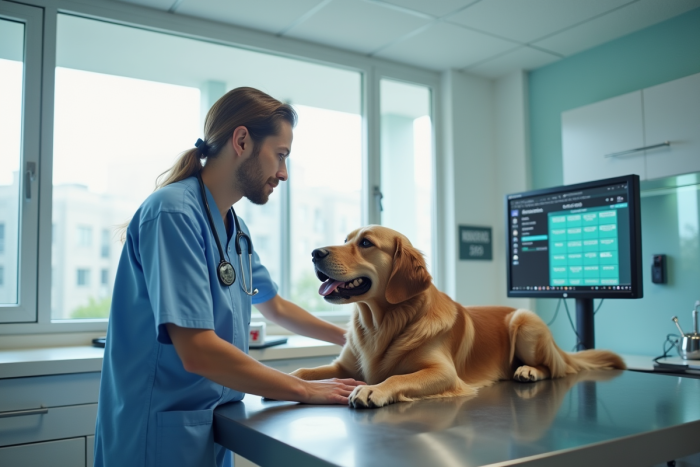
Veterinary data is accumulating at a pace that far exceeds the manual processing capacity of medical teams. Despite this overload, a large part of the sector continues to use traditional management methods, thus limiting the effectiveness of diagnostics and patient follow-up.
However, some establishments are leveraging specialized software that integrates artificial intelligence to automate the analysis of records and anticipate care needs. The observed results show significant gains in time, accuracy, and quality of service, redefining the standards of the sector.
Why artificial intelligence is a game changer in veterinary care
Veterinary medicine is undergoing a transformation that no practitioner can ignore. Artificial intelligence is no longer limited to simplifying administrative tasks: it is now at the very heart of veterinary care, emerging as a lever to accelerate and enhance the analysis of animal health data. Veterinarians can then refocus on their primary mission: to treat, advise, and anticipate.
Specialized software that incorporates AI, such as GMVet 1, is establishing itself as a trusted partner for electronic medical record management. Their strength? To centralize, organize, and present complex information, making the daily operations of veterinary clinics significantly smoother. AI identifies weak signals in an animal’s history in seconds, highlights diagnostic leads, and speeds up decision-making. Gone are the days of lengthy manual searches: everything converges towards the essential.
This upheaval does not stop there: it also affects medical image analysis. X-rays, ultrasounds, MRIs: AI-powered software identifies anomalies that are sometimes invisible to the naked eye, compares each image to global databases, and refines the accuracy of diagnoses. The result? Veterinarians have tools capable of anticipating, individualizing treatments, and enriching every decision.
The veterinarian-owner relationship is also changing dimension. Exchanges are becoming more transparent: every decision is based on clear, easily accessible documentation. Pet owners are better informed, involved in choices, and reassured by traceability. Far from making practice cold or impersonal, these software solutions offer veterinarians the most precious luxury: time for listening and the quality of animal care.
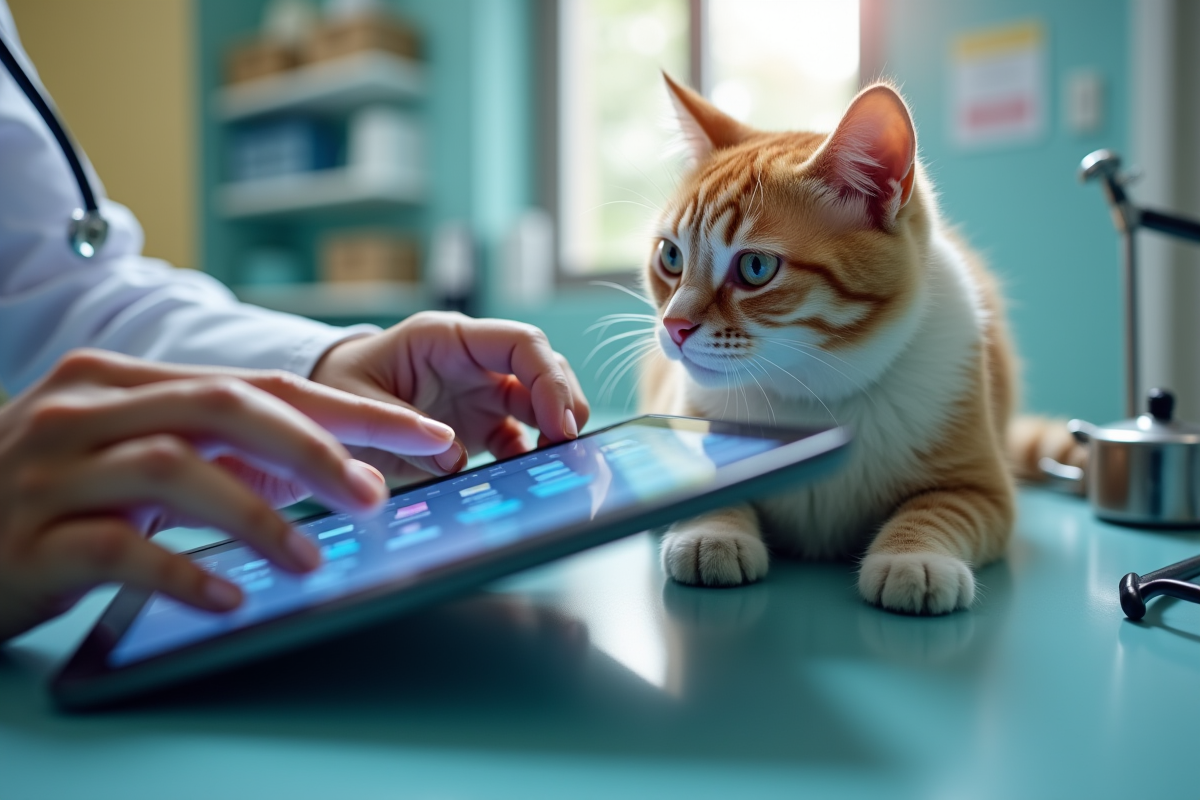
Comparing AI solutions on the market: what options to boost your practice?
The proliferation of veterinary software equipped with artificial intelligence compels each practice to choose wisely. Daily needs impose robust solutions for electronic medical record management, billing, appointment scheduling, and client communication. But the most effective tools go further: they ensure data centralization and streamline every step of the workflow for veterinary clinics.
Some modules deserve special attention to make a difference in daily operations:
- A teleconsultation platform allows veterinarians to provide remote support, particularly useful in underserved areas or for animals whose transportation is risky. Owners benefit from responsive care, reducing their companions’ stress while maintaining quality follow-up.
- Traceability of exchanges and instant sharing of medical information enhance care coordination and build trust with clients.
Another point that should never be overlooked is data security. Veterinarians expect solutions that meet confidentiality challenges, with encryption, secure hosting, and strictly controlled access. Respecting the confidentiality of the electronic health record protects both animals and their owners.
The Electronic Health Record (EHR) becomes the pivot of collaboration among practitioners. It makes every history instantly accessible, accelerates decision-making, and facilitates coordination, even between distant practices. In a multi-site network, patient data centralization ensures consistent quality of follow-up across the territory.
Finally, it is wise to assess a software’s ability to evolve. The addition of new modules, such as medical image analysis or natural language processing, allows for continuous progression in veterinary medicine and adaptation to innovation.
The sector is no longer just observing the transformation: it is shaping it. Artificial intelligence, far from being a gadget, is asserting itself as a new standard of care. It remains for each clinic to choose the solution that will truly free up time, strengthen client relationships, and redefine the quality of care. The veterinary revolution is no longer a matter for tomorrow: it is decided today, in every practice, every consultation, every electronic record opened.